Guide
High-Protein Meal Plan on a Budget | Whole-Food Guide
Eating well for less is a system, not a shopping trick. Decide the week's meals before you shop, cook what is already in the cupboard, anchor meals on inexpensive proteins, compare unit price rather than pack price, use frozen and canned foods where they are equivalent, cook components in batches, and plan for leftovers so nothing is thrown away.
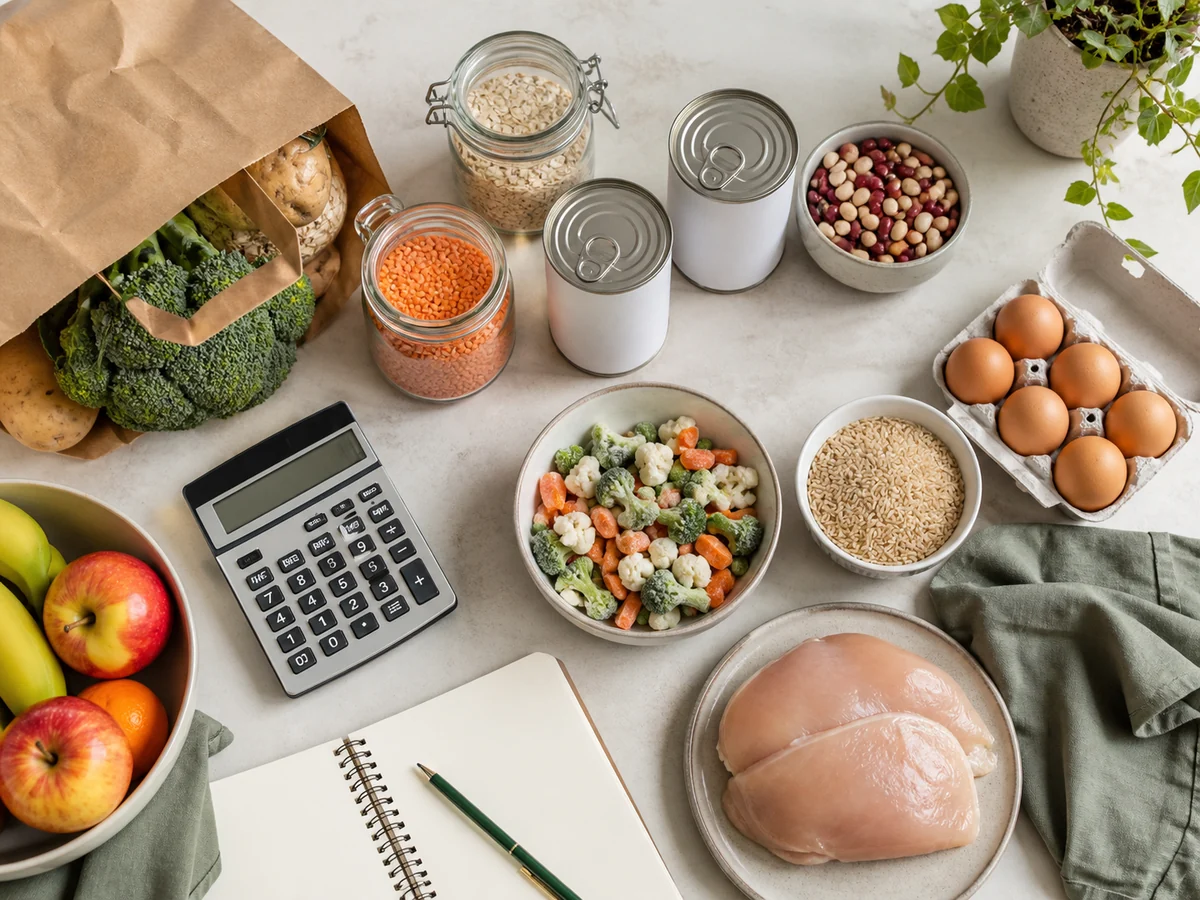
1. Plan the week before you spend anything
MyPlate's budget guidance starts with planning, and the reason is simple: an unplanned trip is priced by the shop, a planned trip is priced by you. Decide how many meals you need, what will be cooked when, and which nights are realistically leftovers. A list built from a plan removes the two most expensive habits — buying without a use and buying the same thing twice.
2. Shop the pantry, freezer and fridge first
Before adding anything to the list, look at what you already own. Half a bag of rice, a tin of chickpeas, frozen peas and a jar of passata are meals you have already paid for. Building the week partly around what needs using up is the fastest way to reduce a bill without reducing what you eat.
3. Anchor meals on low-cost proteins
Protein is usually the most expensive part of a meal, so it is where planning pays best. Eggs, dried or canned beans, lentils, canned fish, chicken thigh, tofu, milk and plain yoghurt all deliver meaningful protein at a low cost per portion. Rotating two or three of these as anchors across the week keeps meals varied without pushing the total up.
For a complete weekly structure, use our 7-day high-protein meal plan with a grocery list.
4. Compare unit price on equal weight, not pack price
Unit price — the price per kilogram, litre or 100 g — is the only fair comparison between pack sizes and brands, and it is usually printed on the shelf label. Cost per serving is a different question: it is what one portion of a finished meal costs you once the recipe is scaled. Cheap per kilogram is not automatically cheap per serving, and a bigger pack is only better value if it actually gets eaten.
5. Use frozen and canned foods deliberately
Frozen vegetables and fruit, along with canned beans, tomatoes and fish, can cost less depending on local prices; they often keep longer and can reduce waste. They are also frequently a straight substitute in cooked dishes. Where the pack is processed, the label matters: check for added salt or added sugars, and rinse canned pulses if you want to reduce the salt they sit in.
6. Cook components in batches and plan the leftovers
Cooking one large tray of chicken, one pot of grains and one pot of a bean or lentil base gives you several meals from a single session of energy and washing up. Deciding in advance which meals are leftovers means the second half of the week is already paid for, and it keeps the food from becoming the thing you throw away on Sunday.
7. Consolidate everything into one list
Turn the week's recipes into a single quantity-aggregated list, organised the way the shop is laid out, and buy from that list only. One trip, one list, one total. This is where a plan either holds or quietly falls apart.
A worked week, in practice
The mechanics are easier to see on real meals. Two inexpensive anchors — chicken and pulses — carry most of the protein, grains and frozen vegetables fill the plate, and every component appears more than once.
Anchor one: a tray of chicken
Cook once, portion across several days. It becomes a chicken and rice bowl on one day and garlic chicken with potatoes on another.
Anchor two: a pot of pulses
Canned or dried, pulses can be a budget-friendly protein option, depending on local prices. A chickpea and feta salad needs no cooking at all and uses up vegetables that would otherwise spoil.
Fill the rest from the freezer
Frozen vegetables can be good value depending on local prices, last for months and reduce the pressure to use fresh produce before it turns. Browse the recipe library to filter by cost and cook time.
Common mistakes
Buying bulk you will not finish
A lower unit price on a pack that spoils is a higher cost per serving. Bulk works for dry goods and freezer items, less so for fresh produce.
Shopping without checking the cupboard
Duplicate staples are the quietest form of overspending.
Cutting protein to cut cost
Switching the protein source is usually cheaper than removing it. See whether whole foods cover your protein.
Frequently asked questions
- What is the difference between unit price and cost per serving?
- Unit price is the price of a standard amount of a product — per kilogram, per litre or per 100 g — and it lets you compare packs and brands fairly. Cost per serving is what one portion of a finished meal costs after the recipe is scaled, including everything else in the dish. Both matter, and they can point in different directions.
- Are frozen and canned foods a real substitute?
- In most cooked dishes, yes, and they cut waste substantially. Check the label for added salt or sugars in processed packs, and choose the plainest version that suits the recipe.
- How much will this actually save me?
- We do not publish a savings figure, because it would not be honest. Prices vary by country, retailer, season and what you already buy. What a system like this reliably changes is waste, duplicate purchases and unplanned spending.
- Does ATHLYRO use live supermarket prices?
- No. ATHLYRO shows estimated food costs from its own reference data so you can compare plans and recipes consistently. They are planning estimates and may differ from what you pay at the till.
Sources
Related guides
Free 7-Day High-Protein Meal Plan (Whole Foods) + Grocery List
A complete seven-day whole-food example with 28 meals, about 155 g protein per day, one weekly grocery list, meal-prep guidance and flexible swaps.
How to Read Nutrition Labels: A Practical 5-Step Guide
Read a packaged food panel in order — serving basis, calories, protein and fibre, saturated fat, sodium or salt and added sugars, then ingredients and allergens. Covers both the US and EU formats.
Can You Get Enough Protein From Whole Foods?
What varied whole-food eating provides in practice, for both mixed and plant-based patterns, with the EFSA adult population reference put in honest context.
High-Protein Meal Prep: 2 Proteins, 2 Carbs, 1 Sauce — Weekly System
Set the protein target and budget, cook repeatable components, respect real constraints, shop one consolidated list, and store and reheat leftovers safely.
Whole Food Meal Plan: Hit Protein and Budget Without Templates
Build a whole-food meal plan that matches your protein target, weekly budget, cook time and kitchen limits using a deterministic planning engine.
Price the week before you shop
ATHLYRO takes a weekly budget as a real constraint and builds a feasible seven-day plan when your constraints can be met; otherwise, it reports the week as infeasible. The consolidated grocery list uses estimated costs from ATHLYRO's own reference data, not live retailer prices, and may vary by retailer and location.
Build my weekGeneral nutrition information only, not medical advice. This guide is written for healthy adults and does not diagnose, treat or replace individual guidance from a qualified clinician or registered dietitian.