Guide
High-Protein Meal Prep: 2 Proteins, 2 Carbs, 1 Sauce — Weekly System
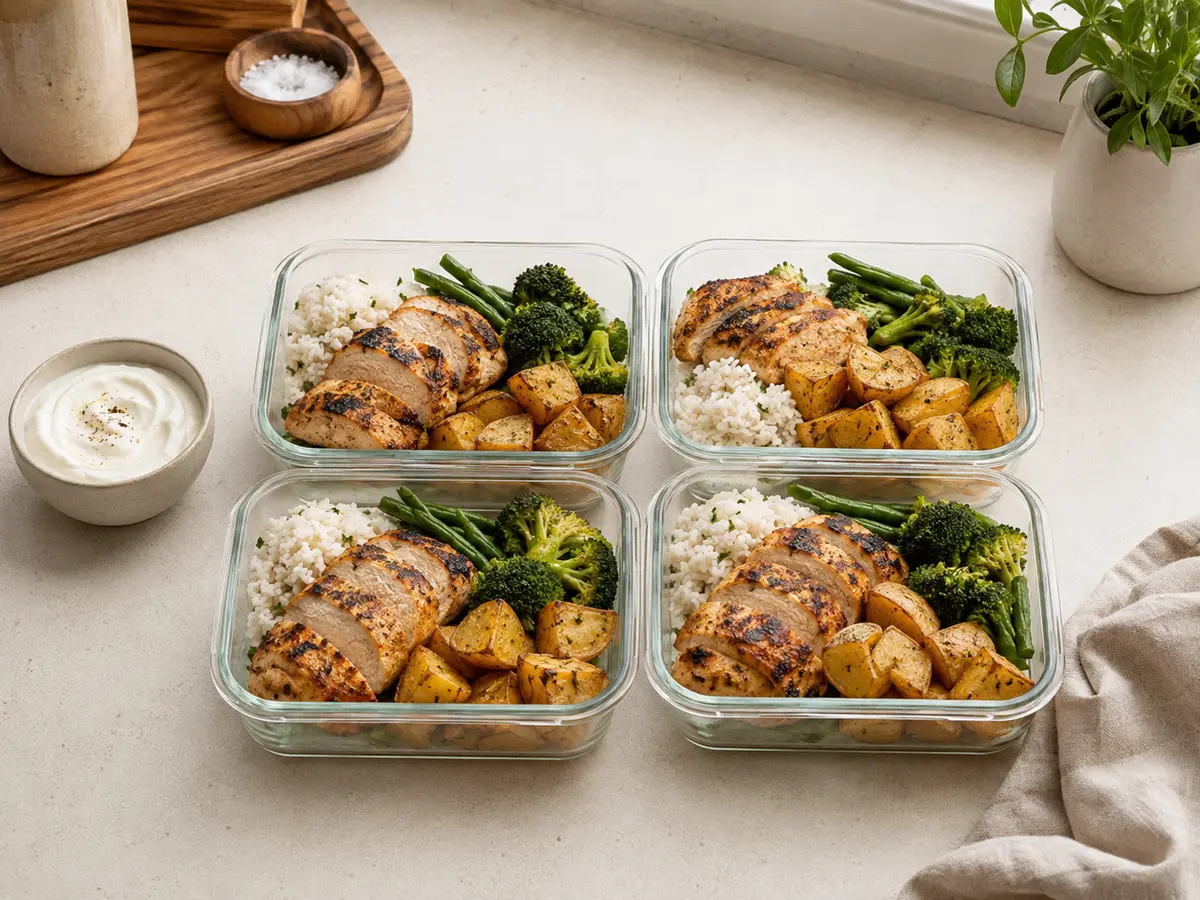
Weekly meal prep works when it is a sequence, not a marathon. Fix a daily protein target and a weekly budget first, choose recipes that fit your real cook time and equipment, batch two protein anchors and two carb bases rather than five finished dishes, shop from one consolidated list, then chill, store and reheat leftovers according to food-safety guidance.
1. Fix the protein target first
Meal prep fails when protein is an afterthought. Set a daily protein target, then divide it across the number of meals you actually eat. Every batch you cook has to carry its share — a 160 g/day target across four meals means each portion needs roughly 40 g.
2. Give the week a hard budget
Batch cooking only saves money if the cost is decided before the shop, not after. Price the week as a single number, then let the recipe mix move inside it. Cheap high-protein anchors (eggs, chicken thigh, lentils, tinned fish, Greek yoghurt) absorb most of the target for the least money.
3. Cook in repeatable components
Prep two protein anchors, two carb bases and one sauce rather than five finished dishes. Components recombine across the week, which prevents the third-day boredom that kills most prep routines, and it keeps active cooking time in one block.
4. Respect your real constraints
Cook time, equipment, allergens and foods you refuse to eat are hard limits, not preferences. A plan that assumes an oven you don't own or a nut you can't eat is not a plan. Filter recipes on those constraints before optimising anything else.
5. Shop from one consolidated list
Turn the week's recipes into a single quantity-aggregated grocery list, rounded up to what shops actually sell. One list, one trip, one estimated total — this is where budget adherence is won or lost.
Batch-friendly recipes in the library
At least 35 g protein per serving and 30 minutes or less of cooking — the two properties that make a recipe worth scaling up.
- Salmon Scramble on Rye38 g protein · 12 min
- Chicken & Rice Power Bowl65 g protein · 25 min
- Turkey & Pepper Wraps59 g protein · 15 min
- Lean Beef & Sweet Potato Hash49 g protein · 30 min
- Cod, Quinoa & Green Beans48 g protein · 25 min
- Salmon, Rice & Charred Zucchini41 g protein · 25 min
This is a shortlist. Browse all 16 high-protein recipes to filter by cuisine, cook time and cost.
6. Store and reheat it safely
Prepping several days of food at once only works if the food stays safe. The following is USDA food-safety guidance for the United States; food-safety authorities elsewhere publish their own rules, so follow the guidance that applies where you live.
Clean, separate, cook, chill
USDA frames the basics as four steps: wash hands and surfaces often, keep raw meat, poultry, seafood and eggs away from ready-to-eat foods, cook to safe internal temperatures, and refrigerate promptly.
Chill within two hours
Refrigerate perishable food within two hours of cooking. Divide large batches into shallow containers so they cool quickly rather than sitting warm in the middle.
Three to four days, then reheat properly
USDA guidance is that most cooked leftovers keep three to four days in the refrigerator, and that leftovers should be reheated to 165°F (74°C). Anything you prepped for later in the week is a freezer candidate rather than a fridge one.
Plan from whole-food principles
Meal prep is a tactic. The broader strategy is a whole-food meal plan built around protein, budget and real constraints. Read how the ATHLYRO engine constructs one before you cook.
Read the whole-food meal plan guideLet the plan do the arithmetic
ATHLYRO takes your protein target, weekly budget, cook time, equipment and allergens and returns a feasible seven-day plan with a costed grocery list. Prices are estimates, not live retailer feeds.
Build my weekPrefer to track the week on paper? The High-Protein Nutrition Tracker is a 12-page printable PDF for logging meals, protein, hydration and habits.
Frequently asked questions
- How long does prepped food actually keep?
- USDA guidance for the United States is that most cooked leftovers keep three to four days in the refrigerator. Freeze anything intended for later in the week, and follow your own national food-safety authority if you are outside the US.
- Do I have to cook every meal in advance?
- No, and it usually backfires. Cooking components — two protein anchors, two carb bases, one sauce — gives you more combinations from one session and avoids eating the same finished dish four days running.
- What if my budget and protein target conflict?
- Change the protein source before you lower the target. Eggs, pulses, canned fish, chicken thigh and plain yoghurt carry a lot of protein per unit of cost.
- How should I reheat leftovers?
- USDA advises reheating leftovers to 165°F (74°C). Stir part-way through where possible so the whole portion heats evenly.
Sources
Related guides
Free 7-Day High-Protein Meal Plan (Whole Foods) + Grocery List
A complete seven-day whole-food example with 28 meals, about 155 g protein per day, one weekly grocery list, meal-prep guidance and flexible swaps.
How to Read Nutrition Labels: A Practical 5-Step Guide
Read a packaged food panel in order — serving basis, calories, protein and fibre, saturated fat, sodium or salt and added sugars, then ingredients and allergens. Covers both the US and EU formats.
High-Protein Meal Plan on a Budget | Whole-Food Guide
A repeatable weekly system: plan first, shop the pantry, anchor on low-cost proteins, compare unit price on equal weight, use frozen and canned well, and cook components once.
Can You Get Enough Protein From Whole Foods?
What varied whole-food eating provides in practice, for both mixed and plant-based patterns, with the EFSA adult population reference put in honest context.
Whole Food Meal Plan: Hit Protein and Budget Without Templates
Build a whole-food meal plan that matches your protein target, weekly budget, cook time and kitchen limits using a deterministic planning engine.
Let the plan do the arithmetic
ATHLYRO takes your protein target, weekly budget, cook time, equipment and allergens and returns a feasible seven-day plan with a consolidated, costed grocery list. Prices are estimates, not live retailer feeds.
Build my weekGeneral nutrition information only, not medical advice. This guide is written for healthy adults and does not diagnose, treat or replace individual guidance from a qualified clinician or registered dietitian.