Guide
High-Protein Meal Plan: 7 Days, Whole Foods + Grocery List
Free 7-day high-protein whole-food meal plan with a printable grocery list. Build a realistic week around your protein target and budget.
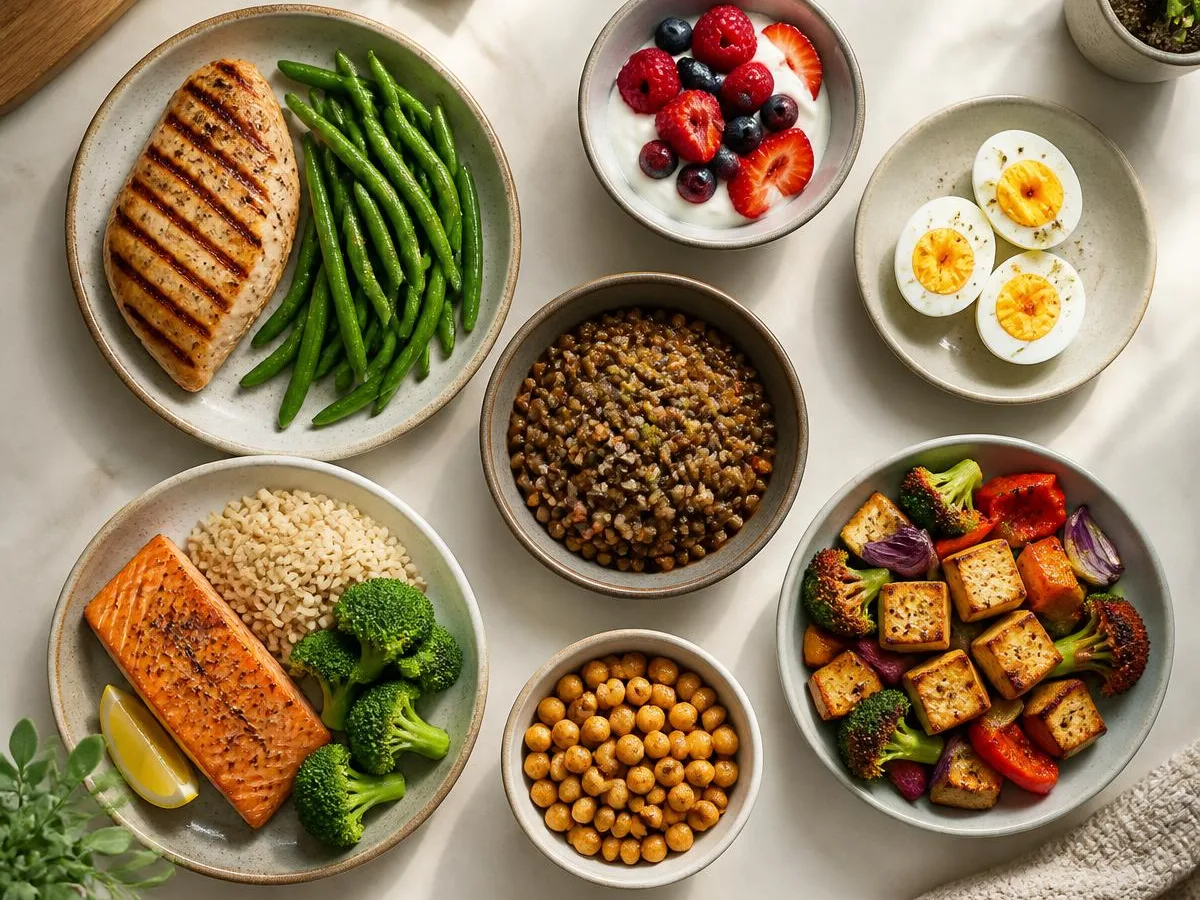
At a glance
- Days
- 7
- Meals per day
- 4
- Total meals
- 28
- Avg. calories/day
- ~2065 kcal
- Avg. protein/day
- ~155 g
- Daily protein range
- 148–159 g
- Whole-food focused: every meal is built around real ingredients, no powders required.
- Complete grocery list, aggregated from the same recipe data shown below.
- Flexible protein and calorie adjustments for fat loss or muscle gain.
This is an example week for generally healthy adults, not a universal prescription. Calorie and protein needs vary with body weight, training, age, sex and goal.
7-Day High-Protein Meal Plan Example
A worked example built only from recipes already published in the ATHLYRO recipe library. Calories and protein come from the published recipe and ingredient data used across these public pages, so every daily total below is simply the sum of its four linked meals — nothing is estimated by hand. This is an editorial example, not output from your personal plan.
Day 1
2064 kcal · 152 g protein
BreakfastGreek Yogurt Protein Bowl
462 kcal · 34 gLunchChickpea, Feta & Tomato Salad
540 kcal · 24 gDinnerGarlic Chicken, Potatoes & Broccoli
721 kcal · 73 gSnackCottage Cheese Snack Plate
341 kcal · 21 g
Day 2
2089 kcal · 157 g protein
BreakfastThree-Egg Scramble, Avocado Toast
534 kcal · 28 g- 584 kcal · 59 g
DinnerLean Beef & Sweet Potato Hash
630 kcal · 49 gSnackCottage Cheese Snack Plate
341 kcal · 21 g
Day 3
2062 kcal · 159 g protein
BreakfastCottage Cheese Oats with Banana
622 kcal · 34 gLunchCod, Quinoa & Green Beans
545 kcal · 48 gDinnerPrawn & Quinoa Bowl
554 kcal · 56 gSnackCottage Cheese Snack Plate
341 kcal · 21 g
Day 4
2076 kcal · 148 g protein
BreakfastSalmon Scramble on Rye
480 kcal · 38 gLunchChickpea, Feta & Tomato Salad
540 kcal · 24 gDinnerChicken & Rice Power Bowl
715 kcal · 65 gSnackCottage Cheese Snack Plate
341 kcal · 21 g
Day 5
2079 kcal · 159 g protein
BreakfastGreek Yogurt Protein Bowl
462 kcal · 34 g- 584 kcal · 59 g
DinnerTofu & Pepper Stir-Fry
692 kcal · 45 gSnackCottage Cheese Snack Plate
341 kcal · 21 g
Day 6
2036 kcal · 152 g protein
BreakfastSalmon Scramble on Rye
480 kcal · 38 gLunchChickpea, Feta & Tomato Salad
540 kcal · 24 gDinnerPrawn & Quinoa Bowl
554 kcal · 56 gSnackGreek Yogurt Protein Bowl
462 kcal · 34 g
Day 7
2048 kcal · 155 g protein
BreakfastThree-Egg Scramble, Avocado Toast
534 kcal · 28 gLunchCod, Quinoa & Green Beans
545 kcal · 48 gDinnerTurkey Meatballs & Roast Potatoes
628 kcal · 58 gSnackCottage Cheese Snack Plate
341 kcal · 21 g
Weekly Nutrition Snapshot
Totalled across the seven days above, using the same recipe data.
- Avg. daily calories
- 2065 kcal
- Avg. daily protein
- 155 g
- Daily range
- 2036–2089 kcal
- Calories from protein
- 30%
Across the week that is 1082 g of protein and 14454 kcal from 28 meals built on 14 distinct recipes, with daily protein between 148 g and 159 g.
High-Protein Grocery List for the Week
Every recipe line in the seven days above, aggregated into one list and rounded up to a practical shopping quantity. Pack sizes vary by shop, so buy the nearest size at or above each figure.
Protein
- Chicken breast380 g
- Chickpeas540 g
- Cod fillet400 g
- Eggs12 pcs
- Firm tofu200 g
- Lean beef mince 5%170 g
- Prawns360 g
- Salmon fillet120 g
- Turkey mince500 g
Dairy
- Cottage cheese1.1 kg
- Feta120 g
- Greek yogurt 2%870 g
- Semi-skimmed milk150 ml
Carbs
- Long grain rice (dry)160 g
- Potatoes580 g
- Quinoa (dry)280 g
- Rolled oats180 g
- Sweet potatoes250 g
- Wholegrain bread240 g
- Wholewheat tortilla4 pcs
Vegetables
- Baby spinach360 g
- Bell peppers280 g
- Broccoli270 g
- Chestnut mushrooms100 g
- Cucumber300 g
- Garlic10 g
- Green beans240 g
- Onions110 g
- Tomatoes560 g
Fruit
- Apples900 g
- Bananas100 g
- Blueberries240 g
- Lemons170 g
Fats
- Almonds170 g
- Avocado120 g
- Extra virgin olive oil130 g
- Peanut butter20 g
Pantry
- Honey30 g
- Soy sauce20 ml
- Spice mix10 g
- Tomato passata150 g
How Much Protein Do You Need?
No single target fits everyone. For healthy adults training regularly, the commonly cited sports-nutrition reference range is 1.4–2.0 g of protein per kilogram of body weight per day. The table below is straightforward arithmetic across that range — a starting point for choosing your own number, not a personalised prescription.
| Body weight | 1.4 g/kg | 1.6 g/kg | 2.0 g/kg |
|---|---|---|---|
| 60 kg | 84 g | 96 g | 120 g |
| 70 kg | 98 g | 112 g | 140 g |
| 80 kg | 112 g | 128 g | 160 g |
| 90 kg | 126 g | 144 g | 180 g |
| 100 kg | 140 g | 160 g | 200 g |
Once the target is set, divide it by the meals you actually eat. Spreading 150 g across four meals is about 37–38 g per meal, which is a portion size you can recognise on a plate rather than a number you have to chase at 9pm. Speak to a clinician or registered dietitian before raising protein substantially if you have kidney disease or another medical condition.
Build Every Meal Around a Protein Anchor
One ingredient per meal carries most of the protein. Everything else is there to complete the plate.
Animal anchors
Chicken, turkey, lean beef, eggs, Greek yoghurt or skyr, cottage cheese, salmon, cod, tuna and prawns.
Plant anchors
Tofu, tempeh, lentils, chickpeas, beans and edamame — usually in larger portions for the same protein.
Carbohydrates (rice, potatoes, oats, bread, fruit) set the energy level of the meal, vegetables add volume and fibre for very few calories, and fats such as olive oil, avocado, nuts and seeds finish the plate and make it satisfying. Protein powder is optional at every step.
High-Protein Meal Plan for Fat Loss
When calories come down, the protein anchor is the last thing to touch. Reduce the adjustable energy sources first: rice and potato portions, added cooking oil, dressings, nut butters and calorie-dense toppings. The meal keeps its shape and its protein, and the day loses the calories you intended it to.
Protein anchor stays. Calories flex around it.
Individual energy needs vary widely, and no meal plan can promise a specific rate of change. Adjust in small steps, review over several weeks, and get individual guidance if you have a medical condition.
High-Protein Meal Plan for Muscle Gain
Meet an appropriate protein target first, then scale energy with foods you can measure: rice, potatoes, oats, bread, fruit, olive oil, avocado or nuts. Adding protein beyond your target is not what supplies the extra energy.
Base meal
Chicken breast, cooked rice and broccoli. The anchor sets the protein, the rice sets the calories.
Higher-calorie version
Same chicken and broccoli, a larger rice portion and a measured spoon of olive oil. Protein barely moves; energy does.
Budget High-Protein Meal Plan
Economical staples carry most budget-conscious weeks: eggs, chicken thighs, canned fish, Greek yoghurt, cottage cheese, lentils, chickpeas, beans, tofu and competitively priced frozen fish. Which of these is cheapest depends on your market and the season, so compare cost per gram of protein where you actually shop rather than assuming a ranking.
The bigger saving is reuse. When the same yoghurt appears at breakfast and in a snack, and one bag of rice covers three dinners, you buy fewer distinct items in larger, cheaper units and throw less away at the end of the week. That is why the grocery list above aggregates ingredients across all seven days instead of listing them recipe by recipe.
How to Meal Prep a High-Protein Week
- 1Cook two or three protein anchors — for example chicken, a tray of baked fish and a batch of lentils.
- 2Cook one or two carbohydrate bases, such as rice and potatoes, in quantities the week actually needs.
- 3Prepare vegetables once: wash, chop, roast one tray, keep one raw option ready.
- 4Assemble components into meals as you need them rather than boxing seven identical dinners.
- 5Do a midweek reset: a short second cook block keeps the back half of the week fresh.
FoodSafety.gov advises refrigerating cooked leftovers at 40 °F (4 °C) or below and using them within 3 to 4 days, or freezing them for longer storage. That is exactly why a midweek cook block beats refrigerating all seven days at once.
High-Protein Food Swaps
Protein role
- Chicken ↔ turkey
- Cod ↔ another lean white fish
- Greek yoghurt ↔ skyr
- Cottage cheese ↔ high-protein yoghurt
- Lean beef ↔ lean turkey mince
- Chickpeas ↔ lentils or beans
- Tofu ↔ tempeh
Carbohydrate role
- Rice ↔ potatoes
- Quinoa ↔ rice
- Oats ↔ wholegrain bread
- Sweet potato ↔ regular potato
- Tortilla ↔ wholegrain bread
Swaps within a role keep the structure of the meal, but the macros are not identical. If you are working to a precise target, recalculate the day after the swap instead of assuming it balances out.
What If You Are Short on Protein at the End of the Day?
Practical whole-food additions close a 20–30 g gap: a bowl of Greek yoghurt or skyr, a portion of cottage cheese, two or three eggs, a tin of tuna, a handful of edamame, or leftover chicken from the prep batch.
Move more protein earlier in the day.
Needing that correction every evening is a signal, not a habit to optimise: breakfast and lunch are carrying too little, and the fix belongs at the start of the day rather than at 10pm.
Common High-Protein Meal Plan Mistakes
- Saving most of the day's protein for dinner.
- Making every meal completely different, which multiplies shopping and cooking.
- Cutting the protein source first when calories come down.
- Buying only premium proteins and blowing the weekly budget in one shop.
- Refrigerating seven days of cooked food instead of freezing part of it.
- Tracking protein carefully while ignoring total calories.
- Assuming protein powder is mandatory.
1. Decide the daily protein target before anything else
A high-protein meal plan is defined by one number: grams of protein per day. Pick a figure inside a range that suits your training and body weight, confirm it with a clinician or registered dietitian if you have kidney disease or another medical condition, and treat it as the plan's hard constraint.
2. Split the target across the meals you actually eat
Divide the daily target by your real meal count rather than an idealised one. A 150 g/day target across three meals means each meal must carry about 50 g; across four meals, about 38 g. Doing this split first tells you immediately whether a recipe belongs in a high-protein plan.
3. Price the week before you shop, not after
Compare anchors on cost per gram of protein rather than cost per pack. Eggs, chicken thigh, tinned fish, dried lentils and own-brand Greek yoghurt usually deliver the most protein per unit of currency in most markets, while premium cuts and pre-portioned convenience proteins deliver the least. Set the weekly budget as a number, then let the recipe mix move inside it.
4. Respect the constraints that are not negotiable
Allergens, foods you refuse to eat, the equipment in your kitchen and the minutes you have on a weeknight are hard limits. Filter recipes on those first, then optimise protein and cost inside what remains. A plan that assumes an oven you do not own is not a plan you will follow.
5. Swap without breaking the maths
A swap is only safe if the replacement keeps the daily protein target met and the weekly cost inside budget after recalculation. Swap first, recompute second, and reject the swap if the week stops being feasible — do not just eyeball it.
The highest-protein recipes in the library
Every recipe below is a whole-food meal with its protein per serving computed from the canonical ingredient database, not estimated by hand.
- Garlic Chicken, Potatoes & Broccoli73 g protein · 35 min
- Chicken & Rice Power Bowl65 g protein · 25 min
- Lean Beef Bolognese63 g protein · 40 min
- Turkey & Pepper Wraps59 g protein · 15 min
- Turkey Meatballs & Roast Potatoes58 g protein · 40 min
- Prawn & Quinoa Bowl56 g protein · 20 min
Browse the full recipe library to filter by cook time, cuisine and estimated cost.
Frequently asked questions
- What is a high-protein meal plan?
- It is a week of meals organised around a daily protein target instead of around recipes. Each meal carries a defined protein anchor, and carbohydrates, vegetables and fats are adjusted around it so the daily total lands where you intended.
- Is 150 g of protein per day enough?
- It depends on body weight and training. Sports-nutrition guidance for regularly active adults commonly sits between roughly 1.4 and 2.0 g per kilogram of body weight per day, so 150 g fits an adult of roughly 75–105 kg inside that range. Use the reference table above rather than a single universal number.
- Can I eat 150 g of protein without protein powder?
- Yes. Eggs, Greek yoghurt, cottage cheese, chicken, turkey, lean beef, fish, tofu, tempeh and legumes cover common targets on their own. Powder is a convenience, not a requirement of this plan.
- Can this structure be adapted for weight loss?
- It can. Keep the protein anchor in each meal and reduce the adjustable energy sources first — rice and potato portions, added oil, calorie-dense toppings. Individual needs vary, so treat any calorie reduction as something to review over weeks rather than days.
- Can it be adapted for muscle gain?
- Yes. Meet an appropriate protein target first, then add measurable energy around it: more rice or potatoes, oats, bread, fruit, olive oil, avocado or nuts. Extra protein beyond your target is not what adds the additional energy.
- Can a high-protein plan be budget-friendly?
- Usually, if anchors are chosen on cost per gram of protein. Eggs, chicken thighs, canned fish, Greek yoghurt, cottage cheese, lentils, chickpeas, beans and tofu are commonly economical, though relative prices differ by market and season.
- Do I have to eat four times per day?
- No. The example week uses four meals because it splits a ~155 g target into manageable portions of roughly 37–38 g. Three or five meals work equally well once you divide your own target by the meal count you actually keep.
- Should every meal contain protein?
- It is the simplest way to reach a daily target without a large deficit to repay at dinner. A meal without a protein anchor is not a failure, but it usually has to be compensated for later in the day.
- Is a plant-based version possible?
- Yes, using tofu, tempeh, lentils, chickpeas, beans, edamame, seeds and wholegrains, though portions are typically larger for the same protein. Fully plant-based eating also needs a reliable vitamin B12 source, since B12 is not naturally present in plant foods.
- How long can meal-prepped food stay refrigerated?
- FoodSafety.gov advises keeping cooked leftovers at 40 °F (4 °C) or below and using them within 3 to 4 days, or freezing them for longer storage. Cook in two blocks rather than refrigerating all seven days at once.
Keep reading
High-protein meal prep
The batch-cooking method that turns this plan into a single cook session.
Whole-food meal plan
How the planning engine builds a whole-food week around your constraints.
Eat healthy on a budget
Unit price, cost per serving and the cheapest reliable protein anchors.
Plant-based protein
Hitting the same protein target without animal products.
The ATHLYRO High-Protein Meal Plan Formula
- 1Set the protein target.
- 2Split it across your normal meals.
- 3Choose one whole-food protein anchor per meal.
- 4Adjust carbohydrates and fats to fit calories.
- 5Turn the week into one grocery list and reuse ingredients intelligently.
Want this week as a printable document? The 7-Day High-Protein Whole-Food Meal Plan is a 30-page PDF with 21 core meals, 7 snack options, a grocery list and a meal-prep plan.
Let ATHLYRO build the high-protein week for you
Give it your protein target, calories, weekly budget, cook time, equipment and allergens. It returns a feasible seven-day plan and a costed grocery list. Prices are estimates, not live retailer feeds.
Build My WeekSources
General nutrition information only, not medical advice. This guide is written for healthy adults and does not diagnose, treat or replace individual guidance from a qualified clinician or registered dietitian.