Guide
Can You Get Enough Protein From Whole Foods?
For most healthy adults, yes. A varied whole-food pattern that includes protein foods at each meal can supply sufficient protein, whether it includes animal foods or not. The protein group spans seafood, meat, poultry and eggs alongside beans, peas, lentils, nuts, seeds and soy products. What matters is variety, total energy intake and consistency across the day.
What counts as a protein food
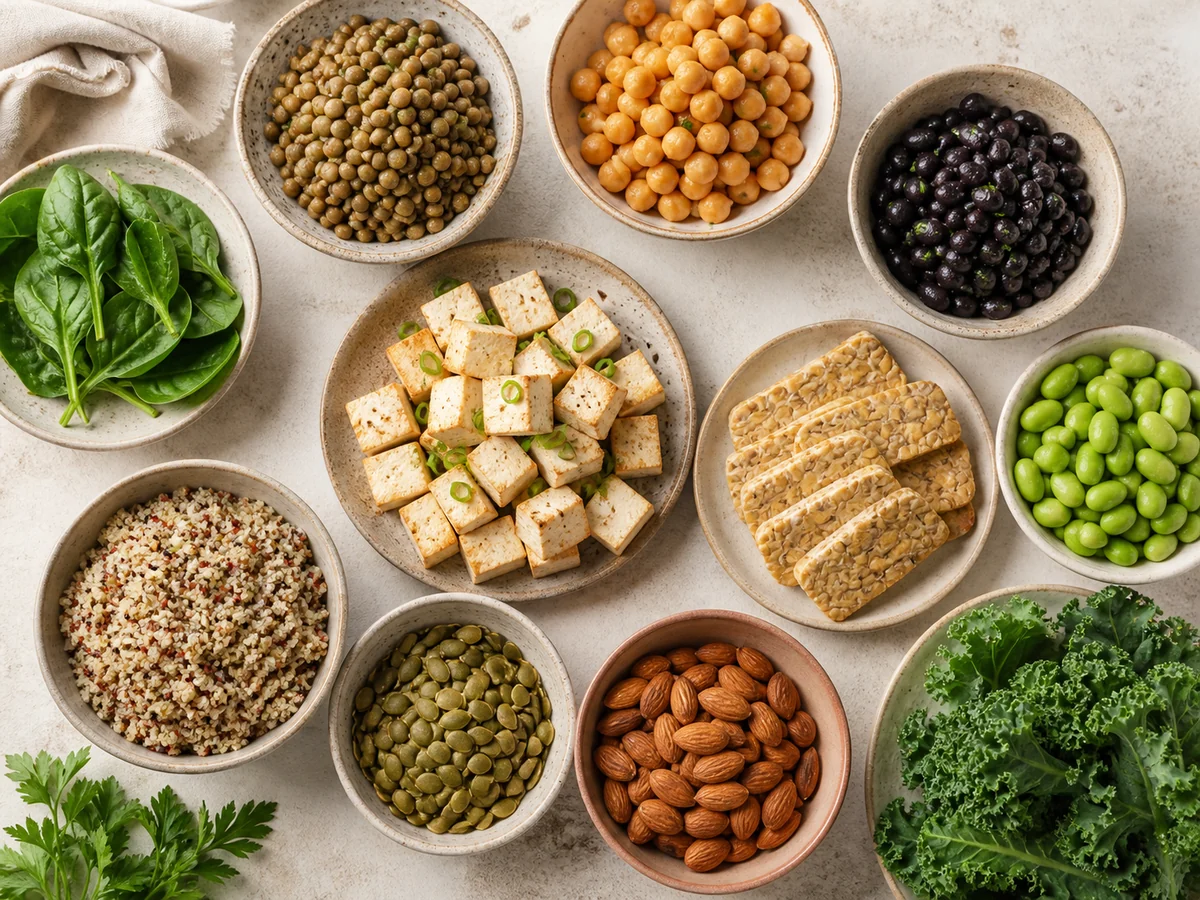
MyPlate's protein group is deliberately broad: seafood, meat, poultry and eggs, plus beans, peas and lentils, nuts and seeds, and soy products such as tofu and tempeh. Beans, peas and lentils sit in both the protein group and the vegetable group, which is a fair reflection of what they do on a plate. Dairy such as milk, yoghurt and cheese contributes protein too, from its own food group. A pattern that draws from several of these across the week is far more robust than one built on a single food.
What the EFSA reference actually says
EFSA set a population reference intake of 0.83 g of protein per kilogram of body weight per day for the general adult population, based on mixed-quality dietary protein. It is a population reference for adequacy, not an ATHLYRO performance target and not a personal prescription. Requirements vary with training load, total energy intake, age, body composition, pregnancy and health status, and someone eating well below their energy needs will need to be more deliberate about protein than someone eating enough.
Distribution across the day matters more than any single meal
Most people find it easier to reach a protein target by including a protein food in every meal than by relying on one large evening portion. Breakfast is where mixed patterns most often fall short — yoghurt, eggs, cottage cheese, soy milk or beans move that meal from near-zero to a meaningful contribution. Recent reviews of protein intake and distribution continue to examine how timing and spread affect outcomes; the practical takeaway is unchanged, which is that consistency beats one large dose.
Plant-based patterns: variety does the work
Plant protein sources differ in their amino acid profiles, and a pattern that includes pulses, soy, grains, nuts and seeds across the day covers that ground without any meal-by-meal combining ritual. Soy foods, lentils, chickpeas, beans and seitan tend to be the densest options; nuts and seeds add protein but also a lot of energy, so they work better as contributors than as anchors. Plant proteins also come with fibre, which is a benefit for most people but can require a gradual increase if your current intake is low.
Nutrients to keep an eye on when avoiding animal foods
Protein is usually not the hardest part of a well-planned plant-based diet. Vitamin B12 is not reliably present in unfortified plant foods, so people who fully avoid animal foods should pay attention to it, and iron, iodine, calcium, zinc, omega-3 fats and vitamin D are worth considering as well. This is general education, not a personal plan: if you are transitioning, pregnant, managing a health condition or feeding children, seek advice from a qualified dietitian or clinician who can look at your actual intake.
What this looks like on a plate
Two patterns, same principle: a protein food anchors every meal, and the anchors rotate.
A mixed whole-food day
Yoghurt and fruit in the morning, a chicken and rice bowl at midday, fish and vegetables in the evening such as salmon with rice and courgette.
A plant-based day
Oats with soy milk and seeds, a chickpea salad with vegetables and lemon for lunch, and a tofu stir-fry in the evening. Browse the recipe library to see estimated protein per serving for each.
Common mistakes
Treating nuts as the protein anchor
Nuts and seeds contribute protein, but they carry a lot of energy per gram. Pulses, soy foods, eggs, dairy, fish and meat do more of the work per calorie.
Leaving protein out of breakfast
A protein-free first meal makes the rest of the day harder than it needs to be.
Chasing a number that was never yours
Population references and gym-forum targets are different things. Pick a target you can justify, and revisit it with a professional if your circumstances change.
Frequently asked questions
- Do I need protein powder to hit a protein target?
- Not as a rule. Whole foods can cover protein for most healthy adults, and this guide does not recommend or sell supplements. A supplement is a convenience tool, not a requirement, and whether it helps depends on your own intake and circumstances.
- Is 0.83 g per kilogram the number I should aim for?
- It is EFSA's population reference intake for the general adult population, expressed for mixed-quality dietary protein. It describes adequacy across a population rather than an individual target, and needs vary with training, energy intake, age and health. ATHLYRO does not present it as a performance prescription.
- Do I have to combine plant proteins at every meal?
- No. Variety across the day and week is what matters for a mixed plant-based pattern; there is no need to pair specific foods within a single meal.
- What about B12 on a fully plant-based diet?
- Vitamin B12 is not reliably supplied by unfortified plant foods, so it deserves attention if you avoid animal foods entirely. Discuss it with a qualified health professional rather than guessing.
Sources
Related guides
Free 7-Day High-Protein Meal Plan (Whole Foods) + Grocery List
A complete seven-day whole-food example with 28 meals, about 155 g protein per day, one weekly grocery list, meal-prep guidance and flexible swaps.
How to Read Nutrition Labels: A Practical 5-Step Guide
Read a packaged food panel in order — serving basis, calories, protein and fibre, saturated fat, sodium or salt and added sugars, then ingredients and allergens. Covers both the US and EU formats.
High-Protein Meal Plan on a Budget | Whole-Food Guide
A repeatable weekly system: plan first, shop the pantry, anchor on low-cost proteins, compare unit price on equal weight, use frozen and canned well, and cook components once.
High-Protein Meal Prep: 2 Proteins, 2 Carbs, 1 Sauce — Weekly System
Set the protein target and budget, cook repeatable components, respect real constraints, shop one consolidated list, and store and reheat leftovers safely.
Whole Food Meal Plan: Hit Protein and Budget Without Templates
Build a whole-food meal plan that matches your protein target, weekly budget, cook time and kitchen limits using a deterministic planning engine.
Set the protein target, then let the plan hit it
ATHLYRO treats your protein target as a constraint and builds a seven-day whole-food plan when allergens, exclusions, cook time and budget can all be respected. If the constraints cannot be met, it reports infeasibility instead of relaxing them. Nutrition values are catalog-backed planning estimates, not medical advice.
Build my weekGeneral nutrition information only, not medical advice. This guide is written for healthy adults and does not diagnose, treat or replace individual guidance from a qualified clinician or registered dietitian.