Guide
Whole Food Meal Plan: Hit Protein and Budget Without Templates
Build a whole-food meal plan that matches your protein target, weekly budget, cook time and kitchen limits using a deterministic planning engine.
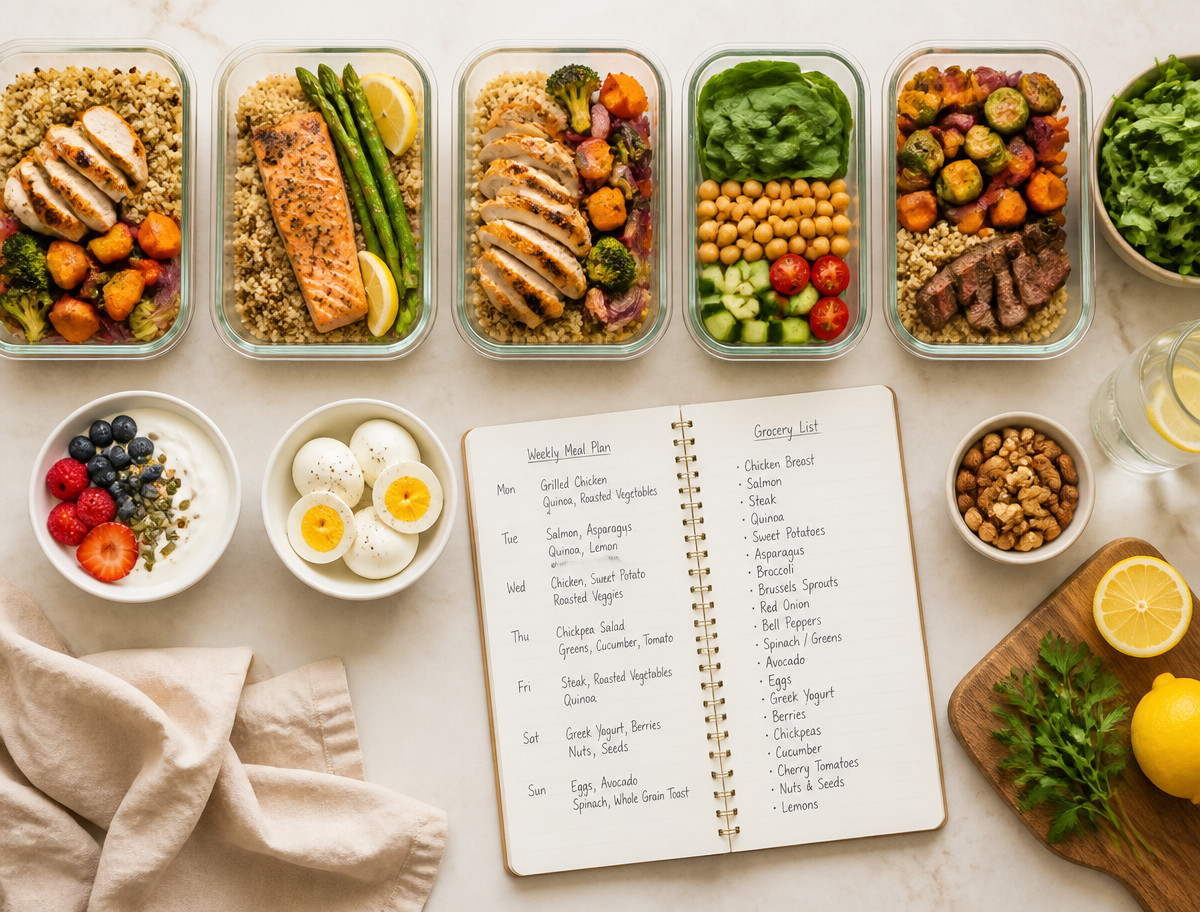
What a whole-food meal plan actually is
A whole-food meal plan is a week of meals built from minimally processed ingredients — vegetables, fruit, whole grains, eggs, fish, poultry, legumes, nuts, seeds and dairy — rather than a list of branded products or supplements. The plan is structured around a daily protein target, a calorie budget, and the time and equipment you actually have.
Why static templates usually fail
Most meal plans are static: the same seven days for everyone. They ignore your protein target, your weekly budget, your allergens, and the fact that you might own a hob but not an oven. A plan that assumes a kitchen you do not have, or a food you refuse to eat, is not a plan — it is a Pinterest board. The real job is to turn your specific constraints into a feasible week.
How a deterministic engine builds the week
ATHLYRO does not generate arbitrary meals. It reads the canonical recipe database, scales each recipe to your target calories and protein, respects your exclusions and equipment, and then selects a mix of meals that fits your weekly budget. If no feasible week exists, the engine returns the smallest safe relaxation — never a hidden allergen break.
Protein first, budget second
Protein is the hardest macro to hit from whole foods without overspending. The engine anchors the week around cheap high-protein foods — eggs, chicken thigh, Greek yoghurt, lentils, tinned fish, cottage cheese — then fills the remaining calories and budget with carbohydrates, vegetables and fats. This order keeps the plan nutritionally useful instead of just cheap.
If your priority is protein, use our 7-day high-protein meal plan as a structured weekly template.
Hard constraints always win
Allergens, explicit food exclusions and equipment incompatibility are treated as hard limits. If you cannot eat nuts, the engine removes every recipe containing nuts. If you only have a hob, no oven-only recipes appear. If the remaining pool cannot meet your protein and budget, the plan is reported as infeasible rather than quietly relaxing a constraint that matters to you.
Shop once, cook once
Once the week is feasible, the engine turns the chosen recipes into a single consolidated grocery list. Quantities are aggregated across meals and rounded up to what shops actually sell — one list, one estimated total, one trip. This is where most budget plans are won or lost, before any cooking starts.
The weekly workflow, end to end
The loop is the same every week: inventory what you already have, set the protein target and weekly budget, declare exclusions and equipment, generate the week, swap the meals you do not want, then shop from the single consolidated list and cook in one or two blocks. Feedback from what you actually ate feeds the next week. Nothing in that sequence requires re-deciding your nutrition from scratch — only adjusting the constraints that changed.
Store it safely once it is cooked
A planned week only works if the cooked food is stored properly. Refrigerate or freeze cooked leftovers promptly, keep the refrigerator at 40 °F / 4 °C or below, and use shallow containers so food cools quickly. Many cooked leftovers are listed for 3 to 4 days in the refrigerator, but storage time depends on the specific food — check the cold food storage chart linked in the sources for the item you have made, and freeze anything you will not eat within its listed time.
Whole-food recipes that anchor a week
These three recipes are made from single ingredients, scale cleanly, and fit most budget and protein targets.
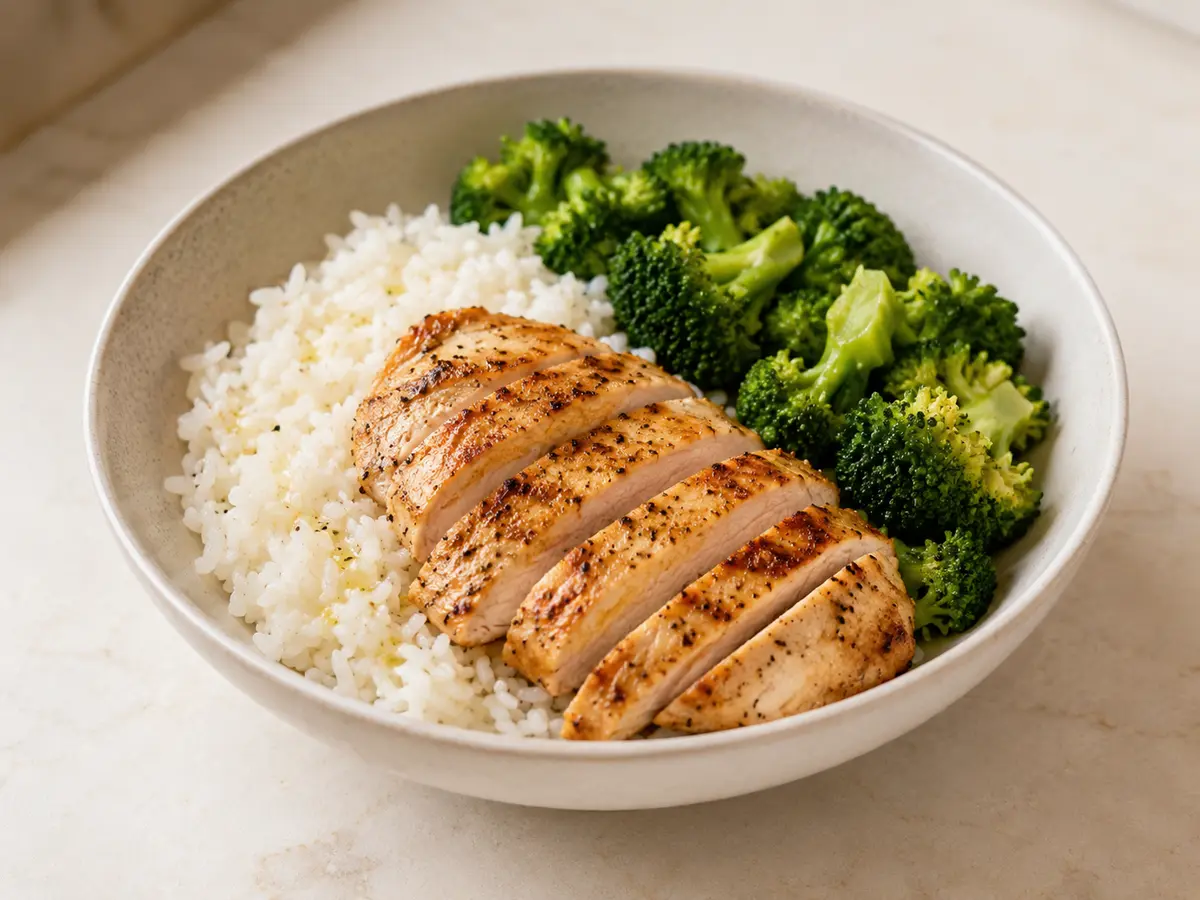
Chicken & Rice Power Bowl
The workhorse. Scales cleanly, reheats well, keeps the weekly cost down.
65 g protein · 715 kcal · 25 min
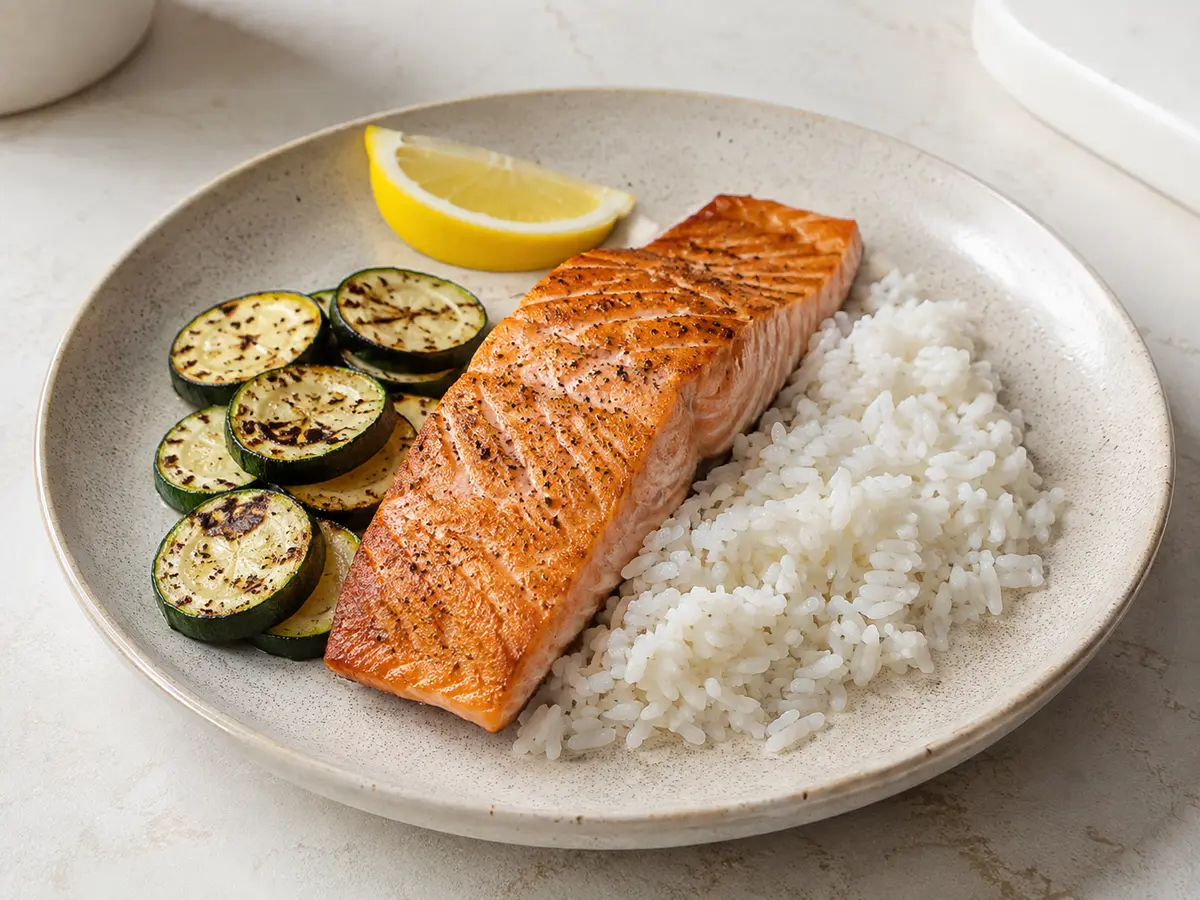
Salmon, Rice & Charred Zucchini
Crisp skin, soft grain, sharp lemon. Restaurant plate, 25 minutes.
41 g protein · 719 kcal · 25 min
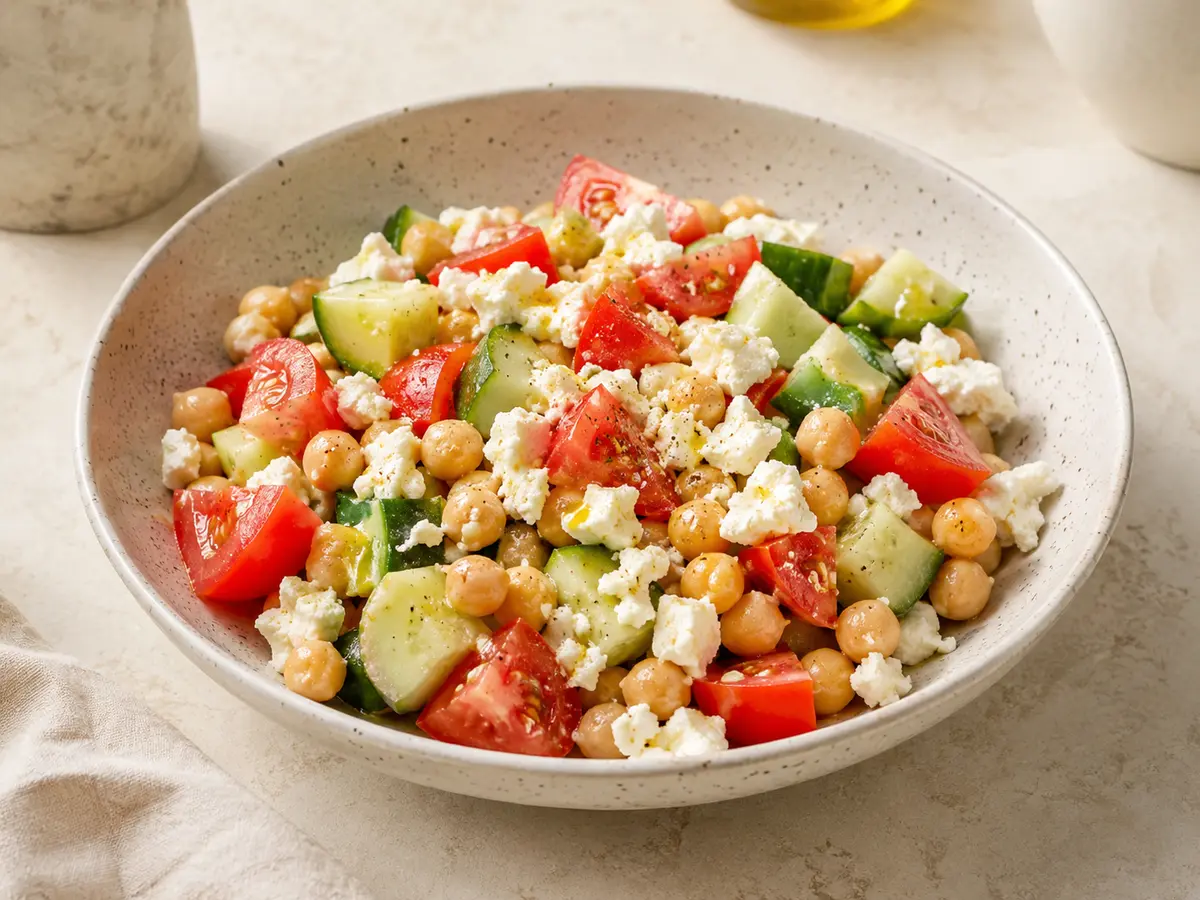
Chickpea, Feta & Tomato Salad
No-cook lunch that survives a bag commute and still tastes deliberate.
24 g protein · 540 kcal · 10 min
These are just three anchors. Browse all 16 high-protein whole-food recipes to filter by cuisine, time and cost.
Frequently asked questions
- What makes a meal plan feasible?
- A plan is feasible when every constraint you set can be satisfied at once: your allergens and exclusions, your equipment, your cook time, your meals per day, and your protein and budget limits. If they cannot all be met, ATHLYRO reports the week as infeasible rather than quietly relaxing one of them.
- How is this different from the meal-prep guide?
- This page is about planning a feasible week — deciding what to eat, within which constraints, and what it will cost. The high-protein meal-prep guide is about executing it: batch cooking, components and the cooking session itself.
- How long do cooked leftovers keep?
- Many cooked leftovers are listed for 3 to 4 days refrigerated at 40 °F / 4 °C or below, but the time depends on the specific food. Check the cold food storage chart in the sources below for the item you cooked, and freeze what you will not eat in time.
- Are the costs shown real prices?
- No. Food costs in ATHLYRO are estimates for planning and vary by retailer and location. There is no live retailer inventory or pricing behind them.
Sources
Related guides
High-protein meal prep
Batch execution: how to cook the week you have planned here.
How to eat healthy on a budget
Unit price, cost per serving and a weekly system for whole foods.
Protein on a plant-based diet
Planning the same week without animal foods, and what to check.
How to read nutrition labels
For the packaged items that still end up on the list.
Build your whole-food week
Set your protein target, weekly budget, cook time, equipment and allergens. ATHLYRO returns a seven-day whole-food plan with a cost-estimated grocery list when constraints can be met; otherwise ATHLYRO reports infeasibility.
Build my weekGeneral nutrition information only, not medical advice. This guide is written for healthy adults and does not diagnose, treat or replace individual guidance from a qualified clinician or registered dietitian.